 Home
About
Capabilities
Performance
Fleet
Safety
Contact
Careers
Home
About
Capabilities
Performance
Fleet
Safety
Contact
Careers
At AGDM, safety and environmental compliance are not afterthoughts bolted onto our operations — they are the foundation on which every project is planned, executed, and delivered. From pre-mobilization planning through final demobilization, every crew member, every piece of equipment, and every process is held to the highest standard.
Our zero-incident track record is not an accident. It is the result of rigorous training, continuous monitoring, clear accountability, and a crew that carries 220+ combined years of experience operating under the most demanding federal and state regulatory frameworks in the country.
Florida's waterways, coastlines, and marine ecosystems are among the most sensitive and closely regulated in the nation. We take that responsibility seriously. Every AGDM project incorporates comprehensive environmental monitoring, habitat protection measures, and real-time water quality testing to ensure our operations leave the environment as good or better than we found it.
Our principal's heritage as an enrolled member of the Pokagon Band of Potawatomi Indians reinforces a commitment to environmental stewardship that goes beyond regulatory requirements — it's a core value.
Environmental Violations
Turbidity Exceedances
Seagrass Impacts
Permit Compliance
Continuous field testing of pH, Dissolved Oxygen (DO), Turbidity, and heavy metals including Copper, Lead, and Arsenic. Monitoring stations established at upstream, downstream, and point-of-discharge locations per permit requirements. All data documented in real-time and submitted in certified environmental reports.
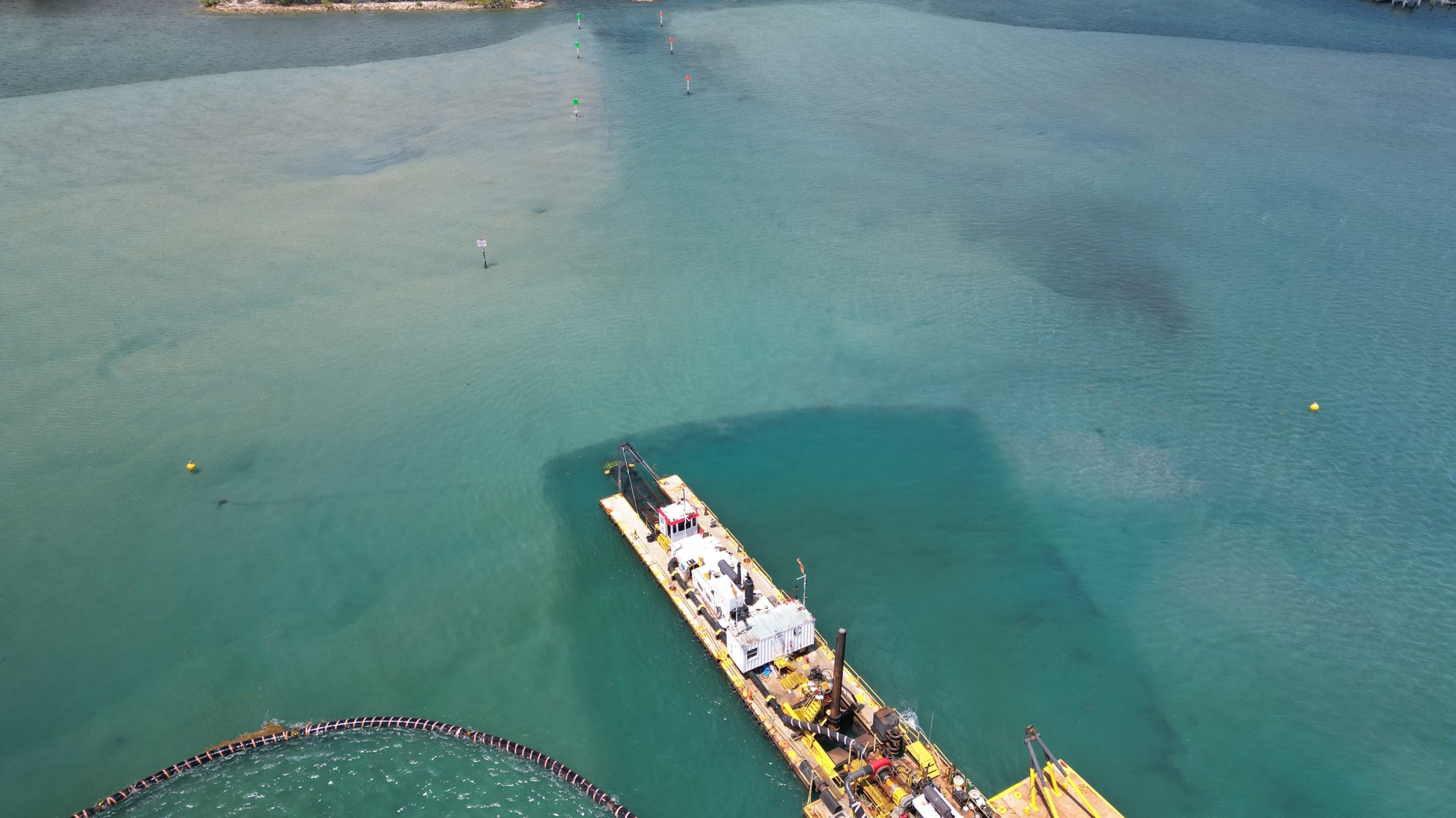
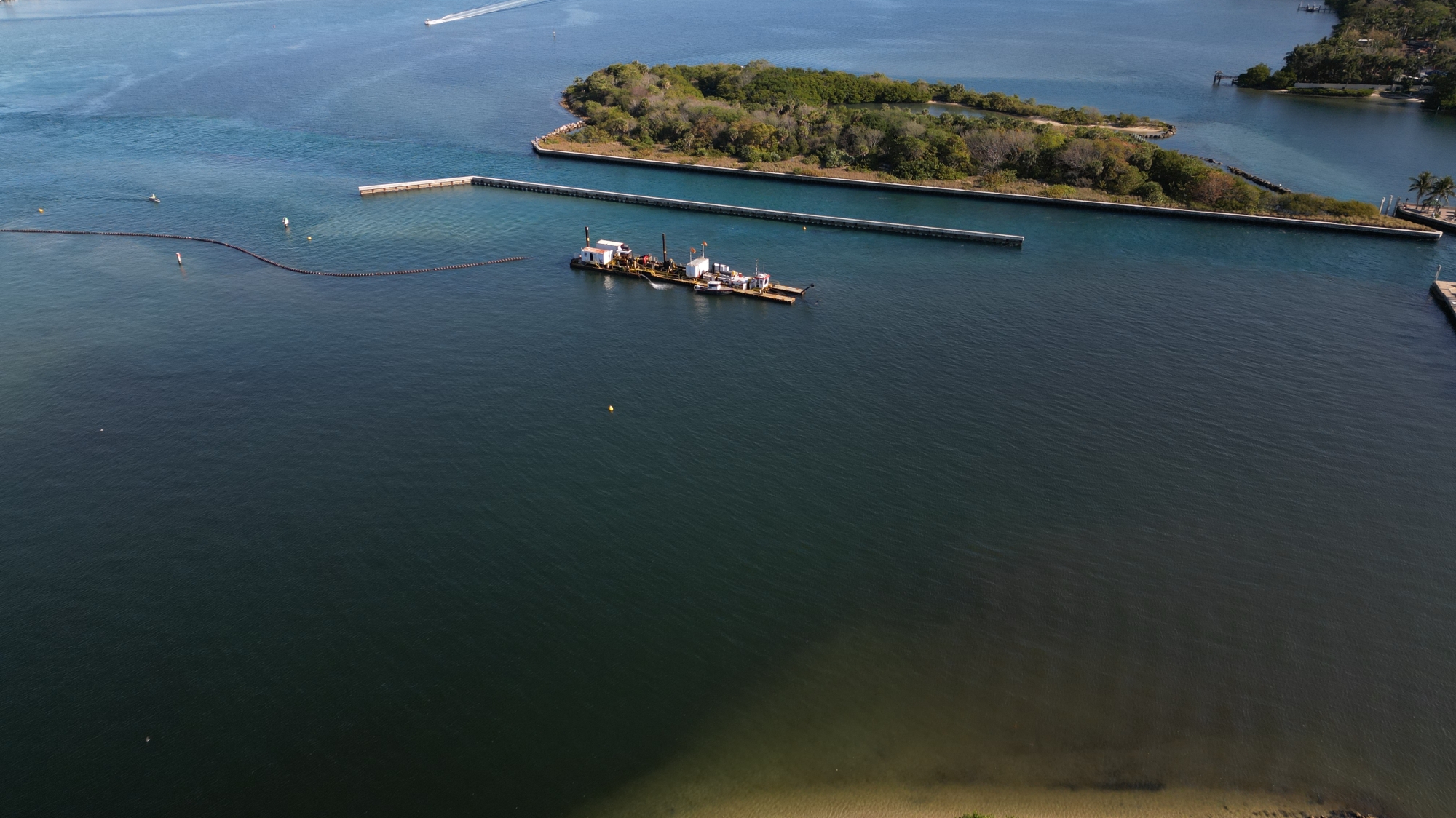
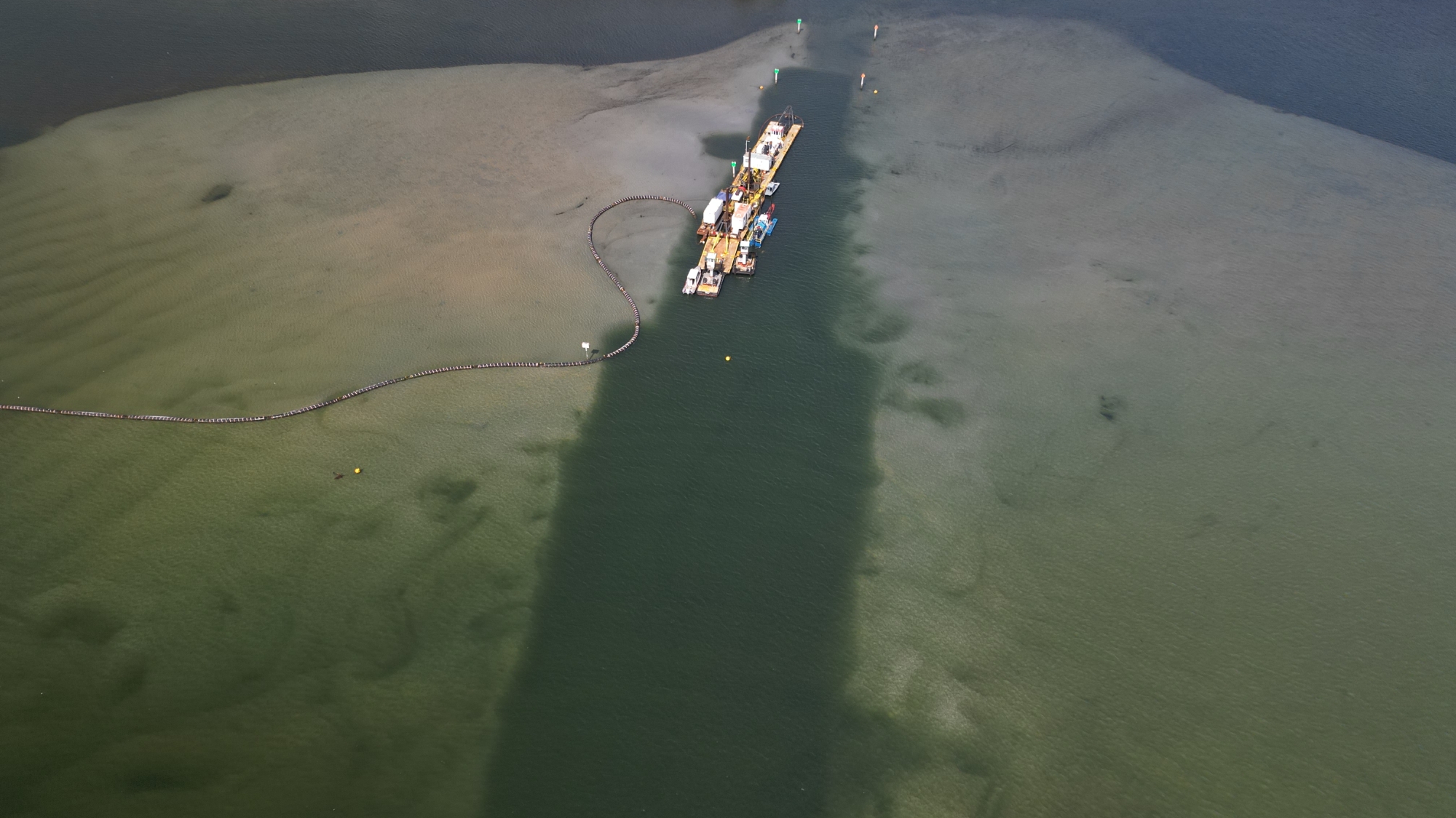
Deployment of turbidity curtains and silt barriers around active dredge areas. Continuous turbidity monitoring with immediate operational adjustments if readings approach permit thresholds. Background sampling compared against discharge-point readings to ensure compliance at all times.
Computer-tracked dredge positioning with programmed exclusion zones around mapped seagrass beds. Operators receive real-time visual displays showing cut lines, grades, and proximity to protected habitat. Pre- and post-dredge surveys verify zero encroachment into sensitive areas.
Dedicated manatee observers stationed during all in-water operations per USFWS and FWC requirements. Established shutdown and exclusion zone protocols when marine mammals are sighted. All observations logged and reported in certified Manatee Observation Reports.
Beach nourishment operations scheduled around sea turtle nesting season restrictions (May 1 – November 1). Pre-placement beach surveys, nest relocation coordination with permitted biologists, and sand tilling to prepare placement areas for nesting habitat.
Spill Prevention, Control, and Countermeasure (SPCC) plans maintained for all equipment and vessels. On-site spill response kits, fuel transfer protocols, and trained personnel ready to respond to any incident. Secondary containment on all fuel and lubricant storage.
AGDM maintains a comprehensive Contractor Quality Control (CQC) program in compliance with USACE EM 385-1-1 and project-specific quality management requirements. Our CQC representatives are experienced in managing documentation, testing, and reporting across the full lifecycle of dredging operations.
Quality control is not a separate function — it's integrated into every phase of operations from initial mobilization through project closeout and final survey acceptance.
Full compliance with USACE EM 385-1-1 safety requirements, CQC standards, and Jacksonville District dredging specifications
Environmental Resource Permits, Joint Coastal Permits, water quality certifications, and coastal construction compliance
Endangered Species Act compliance including manatee protection, sea turtle nesting protocols, and essential fish habitat consultation
Certified for Palm Beach County ERM, Martin County Coastal Management, Charlotte County, and Sarasota County environmental reporting
Compliance with OSHA construction and maritime standards, vessel safety inspections, and crew training requirements
U.S. Coast Guard vessel documentation and safety compliance. Florida Inland Navigation District coordination for ICW projects